Which European City Was the Center for Arts During the Classic Period?
Archetype Period
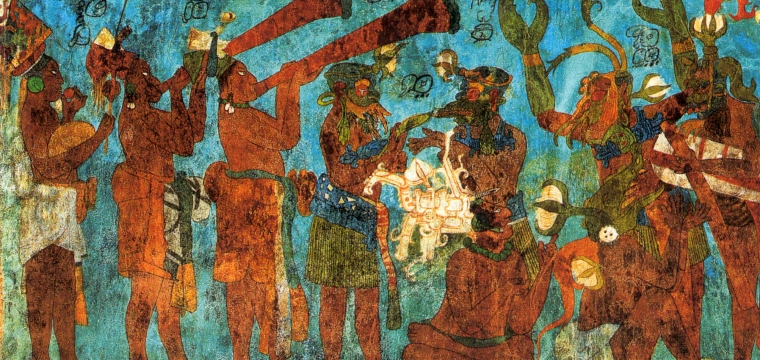
The Archetype flow (250 CE to 900 CE) is considered the meridian of the Maya civilisation, characterized by bang-up accomplishments like
- distinctive writing and calendric systems
- polychrome ceramics
- corbelled vault compages
- major public architecture with pyramids, palaces, brawl courts
The Maya bureaucracy also placed importance on scholars who maintained astronomical reckonings, established sophisticated mathematics, and passed down written texts.
The Classic Menses is defined by the advent and use of dated monuments. Although some monuments announced earlier than Advertizement 250, they are unusual. The wide-spread use of dated stelae occurred toward the terminate of the tertiary century AD . Stela and altars recorded the political, social and religious history of the Maya using the Long Count, a calendrical system based on multiples of a 360-twenty-four hours year with a origin indicate of 3114 BC. The vii centuries of the Classic Menstruum exhibited tremendous developments in Maya culture that were certainly fueled by the steady increase in population. The cores of the massive monument that we see today -- awe-inspiring rock vaulted buildings and huge temple pyramids -- were founded in this catamenia.
The Classic is often divided into two periods, the Early and the Belatedly, separated past the "hiatus." The hiatus was a time when there was a marked decrease in building and the erection of dated monuments, particularly at Tikal. Recent studies have pointed to this equally a phenomenon peculiar to the interior of the Primal Maya Lowlands, probably brought on past Tikal'due south involvement in a series of destructive offensive and defensive military exploits. These then-called wars were based on shifting alliances amongst the reigning regional ability centers of the era, such every bit Calakmul, Naranjo, Caracol, and Tikal. This interlude is variously recorded at these important centers, but, ultimately, the problems reflected past the hiatus were surmounted, making style for an acceleration of the civilization progress in the Belatedly Classic.
All major centers of the region experienced major growth in the Belatedly Classic Period, especially El Pilar. This growth was rooted in the sustainable direction of the region'due south valuable resource constitute throughout the ridge lands. For more than 3 millennia, the Maya were able to support and maintain their society'south growth by forging an unusual alliance with their environment. This brotherhood was a balancing human action that supported the development of the Maya civilization over some 40,000 sq km or 15,440 sq miles of infinite and across some 15 centuries of fourth dimension. The evolution of the relationship between agricultural intensification demanded by the civilisation and consequent ecology change was not based on long-range scientific data collection, equally we might be able to exercise today, and was destined to take dire consequences.
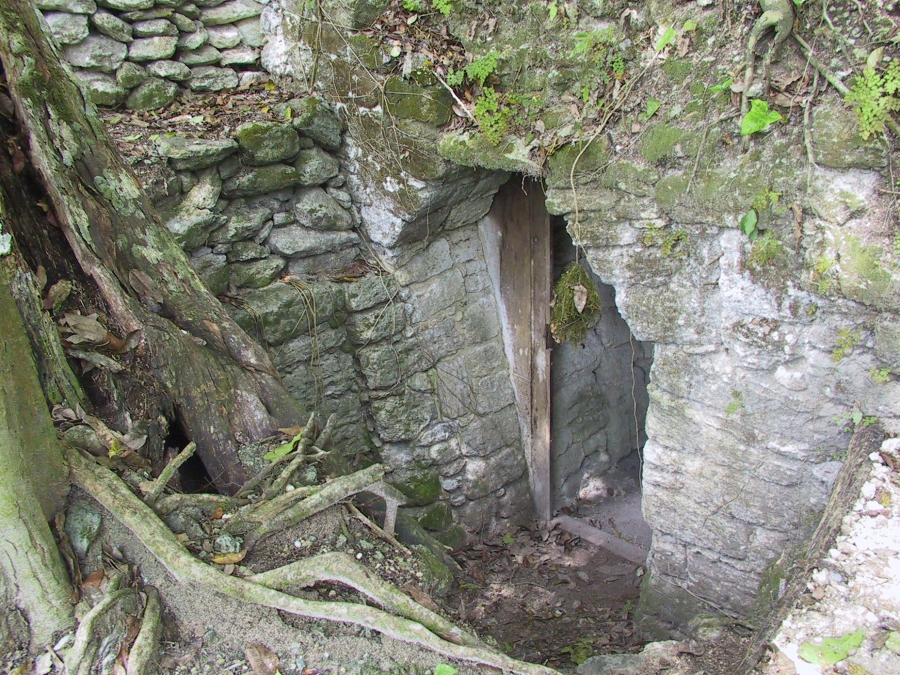
ZotzNa Tunnel
Toward the end of the Classic, the elaborate culture of the Maya began to come apart at the seams. Notably, there was an increase in disharmonize, probably considering of contest over scarce resources, culminating in a drastic reduction in population. This is almost dramatically reflected in the complete arrest of maintenance, not to mention construction, at lowland awe-inspiring centers such as El Pilar. Residential settlements were not so abruptly abandoned, but they besides were at final abandoned. The slap-up Classic centers in the key lowlands collapsed offset -- Tikal was deserted in the 9th century. Building activity was prolonged at many eastern centers right to the end of the Terminal Classic as recorded at Xunantunch and El Pilar. Around El Pilar, occupation even extended into the Postclassic. This was the fourth dimension when the once magnificent regal rooms, such as Zotz Na at El Pilar, were used for dumps and ultimately sealed in the final efforts to redeem the eye'southward past celebrity.
Source: https://www.marc.ucsb.edu/research/maya/ancient-maya-civilization/classic-period

Post a Comment for "Which European City Was the Center for Arts During the Classic Period?"